The consequence of a website that stops moving
Your Website may cost your Business Growth
A bad website is often just a website that stopped evolving. It’s like printing 500 business cards and then locking them in a drawer. Visibility doesn’t work unless it circulates.
But stagnation isn’t the only issue. A website can be active and still be structurally weak. In 2026, that distinction matters more than ever. Because search engines and AI are simply trying to understand what you do. If your website is clear and well-structured, they will understand it. If it’s muddled, they'll move on.
I unpack this further in my earlier article on building authority in the AI SEO world where I explore how clarity and depth strengthen visibility over time.
The 3 dimensions of a "bad" website
A bad website isn’t just one that looks outdated. It lacks structural clarity, strategic content, and a clear pathway for both humans and machines.
There are three core dimensions where weakness shows up.
- Structural Design
- Customer Pathway
- Authority & AI Signals
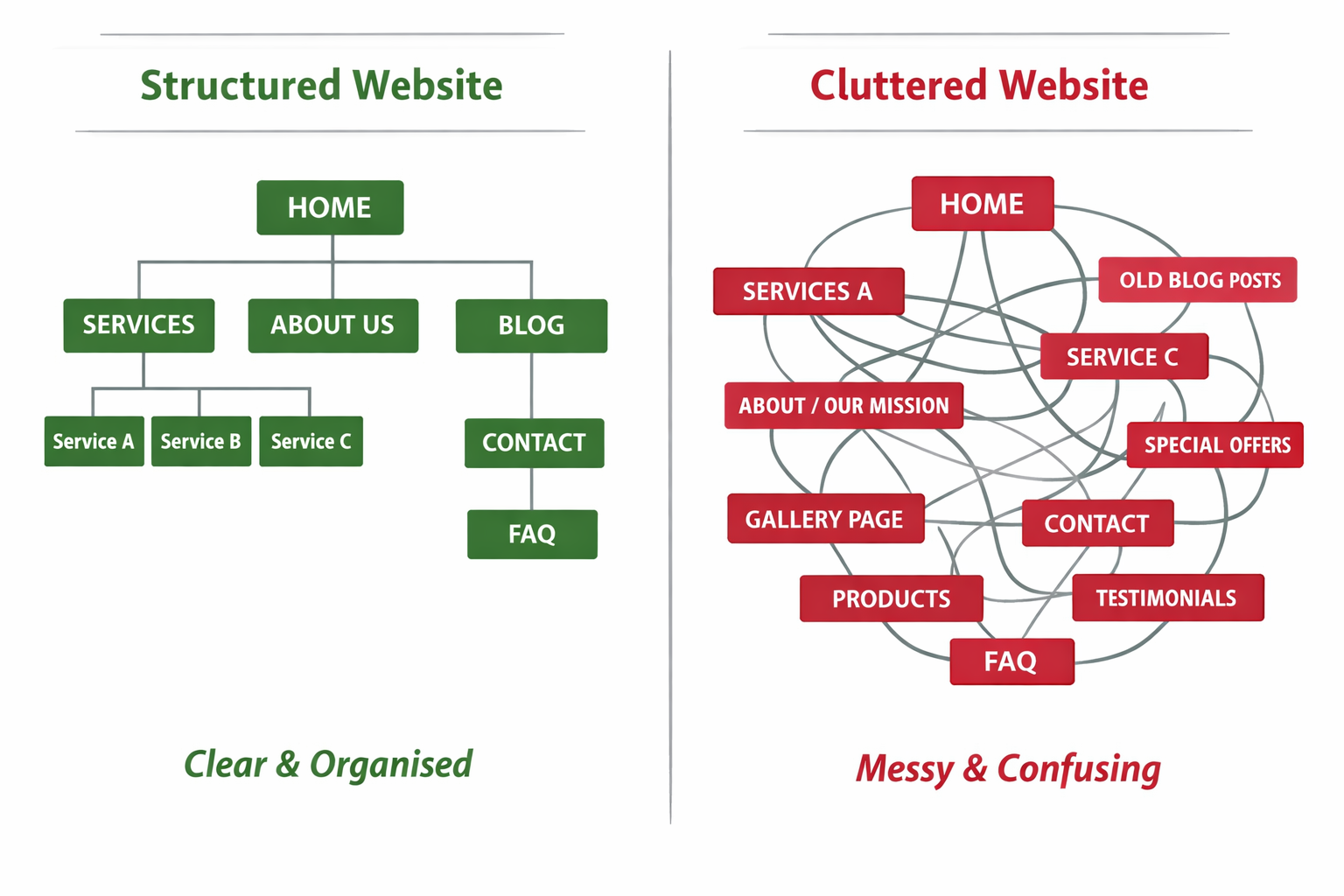
Structural design
Not colours. Not fonts. Structure.
Most website problems are architectural.
- Is there a clear service hierarchy?
- Are services separated logically?
- Is internal linking intentional?
- Is the site crawlable and coherent?
- Does the content demonstrate depth of expertise?
If the structure is unclear, customers struggle to understand what you do...and so do search engines.
If your services are lumped into one vague page, or your internal linking is accidental rather than strategic, your authority signals are diluted.
In the AI era, clarity builds strength and value. Confusion weakens everything.

Customer pathway
This is your UX layer. (User Experience for the customer)
Even a structurally sound website can lose business if it doesn’t guide visitors.
Ask yourself:
- Can someone land on your homepage and understand what you do within five seconds?
- Is there a clear next step?
- Is your messaging aligned with what your customer is searching for?
- Does your homepage guide visitors deeper with clear prompts or FAQs?
Does your content build trust from the first scroll?
If your website doesn’t guide a visitor, it behaves like a salesperson who talks but never directs. People don’t complain. They simply leave. That’s where conversion leakage begins.
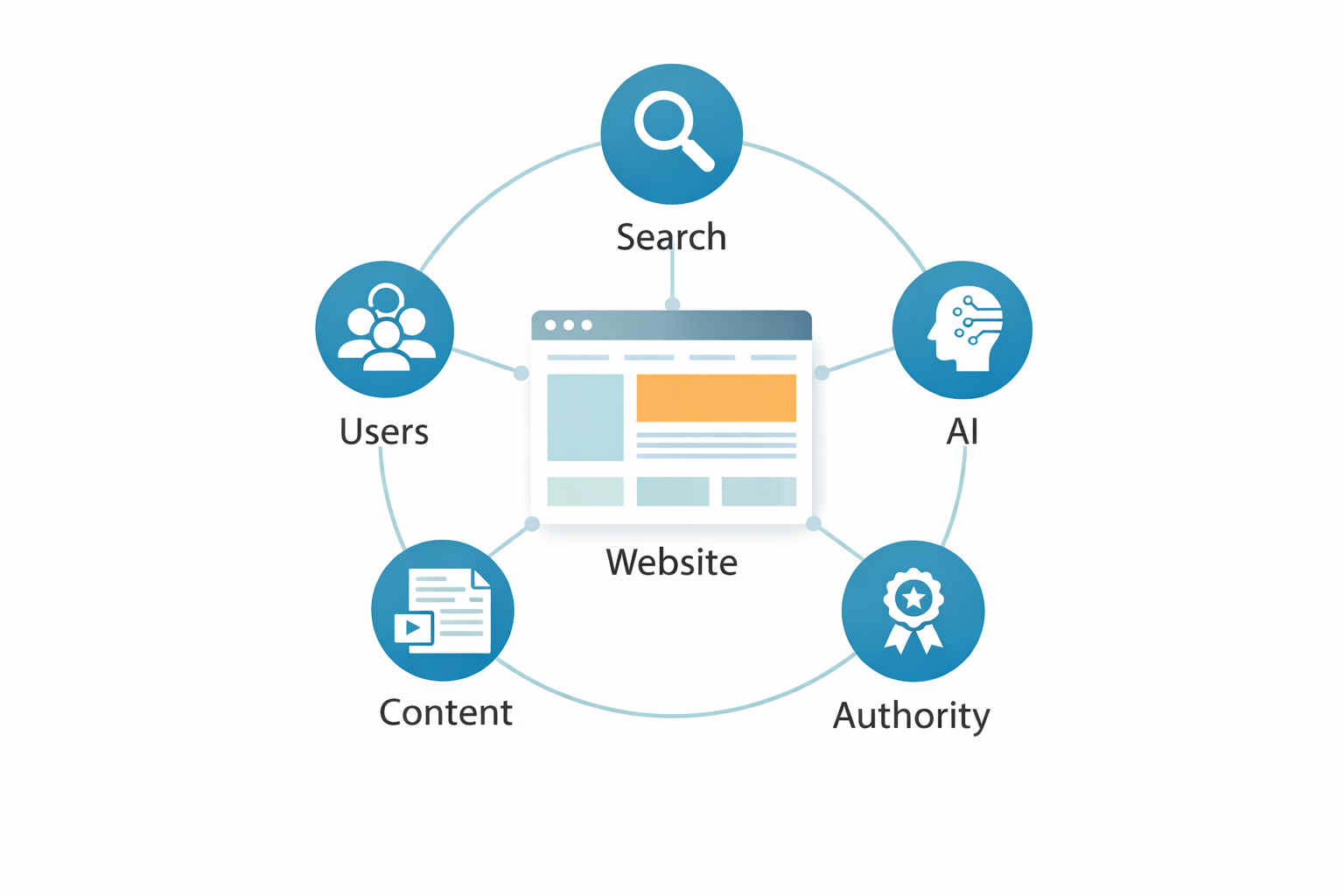
Authority & AI signals
The modern layer
Search engines and AI systems don’t care if your website looks modern.
They’re trying to understand:
- What does this business actually do?
- Is it explained clearly?
- Is there real depth here?
- Is the information current?
- Do they clearly know what they’re doing and does the site prove it?
AI isn’t admiring your typography. It’s scanning for clarity, structure, topical depth, consistency, and signs that your business is active and credible.
So if your design is messy, your content is thin, and your structure is weak…AI systems don’t penalise you dramatically. They simply move on... logically.
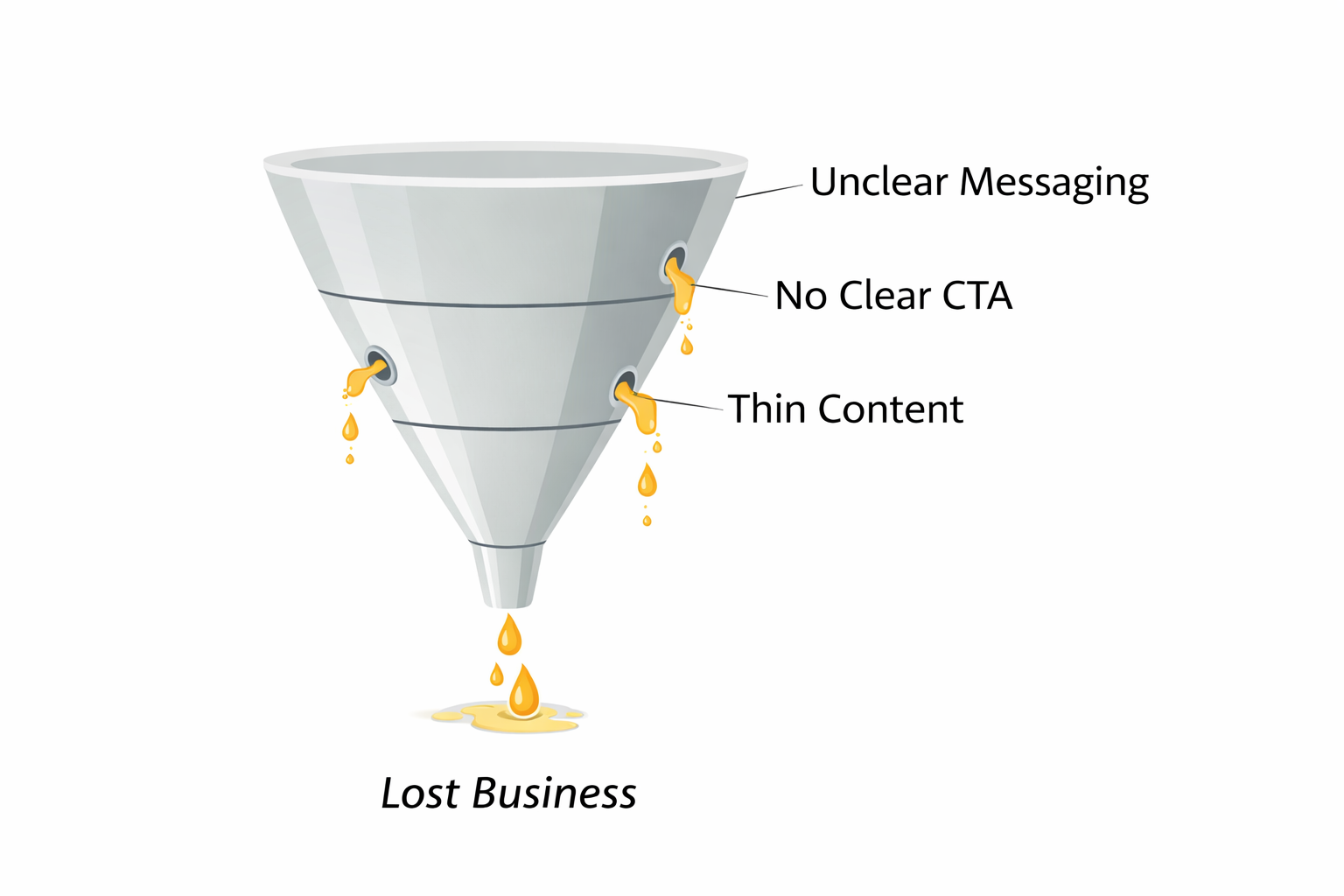
The real business consequences
When structural weakness and stagnation combine, the impact isn’t loud. It’s subtle. And that’s what makes it dangerous.
1. Lost confidence
Visitors pause. Something feels slightly unclear. Slightly unfinished. Slightly uncertain.
They may not be able to articulate it, but they sense it.
- The messaging doesn’t quite land.
- The pathway isn’t quite obvious.
- The structure doesn’t quite reassure.
And when clarity wobbles, trust does too.
2. Conversion leakage
This is where business quietly slips through the cracks.
People don’t complain. They simply leave. They don’t enquire. They don’t call. They don’t book.
Not because you lack expertise, but because the next step wasn’t obvious; because the journey required too much effort, and because, the reassurance wasn’t strong enough.
That’s conversion leakage. Not dramatic. Just steady, silent loss.
3. Visibility erosion
This is the quietest consequence of all.
- Search visibility softens.
- AI citations become less frequent, if ever there was any.
- Competitors with clearer structure and deeper content begin to surface instead.
You’re still operating but you’re no longer circulating and in digital ecosystems, circulation builds authority. Stagnation shrinks it.
A website is not a brochure
A website is not a static asset you build once and forget. It’s a living part of your business ecosystem.
- It should grow as your services grow.
- Refine as your message refines.
- Strengthen as your authority strengthens.
When approached holistically, structure, content, pathway, authority, it creates a positive, seamless experience for the people you’re trying to serve.
And that experience is what builds long-term value.
Final thoughts
A bad website simply stops building momentum. And in 2026, momentum is what separates visible businesses from invisible ones.





.avif)